 Now lets not even talk about congress here. I have never supported congress and have known of their intentions since long time so neither their stand on the Janlokpal issue nor their reluctance to take anti-corruption measures comes as a surprise to me. And really I have nothing to complaint against them as that is not the party which I support.
But bjp is a party which claims to be "Party with a difference" and in many aspects it is or shall I say it used to be. All the points where bjp could claim an upper hand from political rivals are slowly diminishing and unfortunately they are also following in the footsteps of other parties. I have been a supporter of bjp since a very long time and have tried to convince many others also that their policies are better for the nation than the congress. But on the JanLokpal issue the stand of bjp has been very disappointing. Infact it hasn't taken a stand at all! It wants the prime minister to quit office but doesnt tell where its own intentions lie.
I had expected a strong stand from bjp and support for the anti-corruption measure specially when it had said earlier that they would support the JanLokpal bill. Every political party is trying to take advantage of the situation without really doing anything. From congress we dont expect anything but from the opposition hard measures were expected.
In 2014 I would remember how political parties responded when people needed support. I hope others would do the same.
 Introduction-
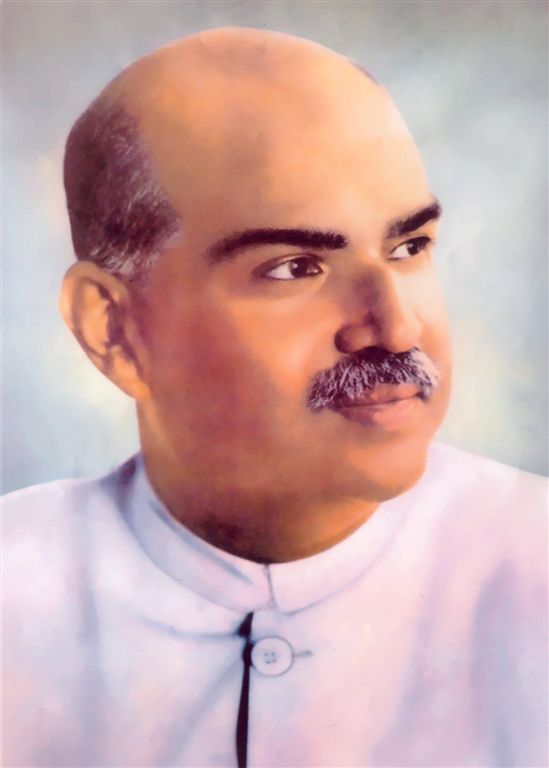
Syama Prasad Mookerjee [July 6, 1901 - June 23, 1953) was a nationalist political leader of India, and is considered the godfather of modern Hindutva and Hindu Nationalism. Mookerjee founded the Bharatiya Jana Sangh, the first Hindu nationalist political party of its kind, and was also the leader of the Hindu Mahasabha and closely associated with the Rashtriya Swayamsevak Sangh.
Relevance to Kashmir-
Syama Prasad Mookerjee opposed the Indian National Congress's decision to grant Kashmir a special status with its own flag and Prime Minister. According to Congress's decision, no one, including the President of India could enter into Kashmir without the permission of Kashmir's Prime Minister. In opposition to this decision, he once said "Ek desh mein do Vidhan, do Pradhan and Do Nishan nahi challenge" (A single country can't have two constitutions, two prime ministers, and two National Emblems).
Mookerjee went to visit Kashmir in 1953, and observed a hunger strike to protest the law that prohibited Indian citizens from settling in a state within their own country and mandated that they carry ID cards. He was arrested on May 11 while crossing border into Kashmir. Although the ID card rule was revoked owing to his efforts, he died in detention on June 23, 1953 under mysterious circumstances.
Death-
Shyama Prasad was arrested on entering Kashmir on May 11, 1953. Thereafter, he was jailed in a dilapidated house. Shyama Prasad had suffered from dry pleurisy and coronary troubles, and was taken to hospital one and a half months after his arrest due to complications arising from the same. He was administered penicillin despite having informed the doctor-in-charge of his allergy to penicillin, and he died on May 23, 1953.
Also Read-
A tribute to Shyama Prasad Mookerjee
 The Indian state of Gujarat is planning to host Asia's first commercial-scale tidal power station.
The company Atlantis Resources is to install a 50MW tidal farm in the Gulf of Kutch on India's west coast, with construction starting early in 2012.
The facility could be expanded to deliver more than 200MW.
The biggest operating tidal station in the world, La Rance in France, generates 240MW, while South Korea is planning several large facilities.
To claim the title of "Asia's first", the Indian project will have to outrun developments at Sihwa Lake, a South Korean tidal barrage under construction on the country's west coast.
Atlantis's recent feasibility study in Gujarat concluded that the state had good potential for tidal exploitation.
"About two and a half years ago we ran a global study of tidal power resources and came up with some hotspots where resource seemed pretty well matched to load," said Atlantis CEO Tim Cornelius.
"One of them was the Gulf of Kutch - and since then we've had wonderful support from the government, culminating in the annoucement that the project was going ahead," he told BBC News.
Projections indicate that the cost of the initial 50MW farm - to consist of 50 1MW turbines - will come in at about $150m.
BBC Link

New Delhi, Dec 17 (PTI) Gujarat is indeed all set to paint the country "saffron", Chief Minister Narendra Modi said here but the Hindutva icon was today referring to his state taking the lead in bringing about an energy revolution.
"The milk (white) revolution began here, the green revolution was from Delhi, and now, we will trigger the energy - saffron- revolution. In this way, the tricolours of Indian flag will be in Gujarat," he said.
The Chief Minister was speaking at a seminar on ''Gujarat-- the hub of excellence for infrastructure and real estate'' organised here by Confederation of Real Estate Developers of India (CREDAI).
Modi said the government''s "modus operandi" when it came to preparing policies was to make a draft and then upload it on the website, invite inputs from industry and common man and then go ahead with a balanced view.
A leading US-based foundation has awarded Gujarat the world''s largest solar plant and 34 solar projects are in the pipeline. The state also houses India''s first tidal energy project and the largest wind energy farm, he pointed out.
 The ruling comrades in Bengal are trying to win back Muslim support by organising seminars in the capital, but the CPM-led regime hasn’t shown the same enthusiasm in implementing welfare schemes for minorities in the state.
Bengal has been listed as one of the worst performers in executing poverty alleviation schemes for the minorities under the Swarna Jayanti Shahari Rozgaar Yojana. The figures have emerged barely months before next year’s Assembly polls and at a time the state’s Left government has been trying desperately to win back Muslim support after a series of electoral reverses.
The recent seminars in Delhi — one for the “intelligentsia” and the other for migrant workers — were part of these efforts and were aimed at spreading the message that no one has cared for the minorities like the Left.
According to the data collected, Bengal, whose 27 per cent minority population is one of the highest in the country, has given assistance to only 11 persons from the minority community to set up micro enterprises against a target of 153.
The state has the lowest ranking in this category, while Andhra Pradesh(Congress), Bihar(BJP-JDU), Madhya Pradesh(BJP), Maharashtra(NCP-Congress) and Orissa(BJD) have exceeded the targets they had been set. The best performer has been Gujarat(BJP).
In skill training, Bengal has been able to help only 40 persons against a target of 1,224, while neighbour Bihar(BJP-JDU) has far exceeded its target.
Link
 ''If Modi can become the second Gujarati to have his picture on rupee, he will consider his life well spent.''
The unnamed young students of Ahmedabad who had a question or two for Rahul Gandhi this week were pertinent, not pert. They also provided more evidence that students are doing the job that journalists either cannot, or will not, do; which is, ask relevant questions. In this case, media was prevented from reporting the event, so journalists can’t be faulted, and we know what happened thanks only to an enterprising reporter from the ‘Times of India’ who had a source inside the hall.
The essence was simple and the same: students wanted to know why they should vote for the Congress when Narendra Modi had developed Gujarat so much. One answer given by Rahul Gandhi was odd, to say the very least. Mao Zedong, said Rahul Gandhi, also developed China but “he caused destruction to the country, too”. I am not too sure whether Narendra Modi would mind being compared to one of the great figures of the 20th century, warts and all. Rahul Gandhi probably gets his views on history from some briefing by a young and fresh associate, but he could have checked with the Chinese.
They have moved on from Mao, just as India and the Congress have moved on from Mahatma Gandhi, but China still reveres the leader of the Long March as the leader who laid the foundations of China’s economic miracle. Mao’s portrait dominates Tienmien Square as well as the nation’s banknotes. If Modi can become the second Gujarati to have his picture on the Indian rupee, he will consider his life well spent. Chairman Modi has quite a nice ring to it as well, although Modi would be going too far if he published a little red book packed with his quotable quotes and asked millions of young people to wave it in unison during a cultural revolution.
A young girl was sharper in her question. She asked which Congress leaders could measure up to Modi on the development matrix. Rahul Gandhi had four names on the tip of his tongue: Manmohan Singh, P Chidambaram, Jairam Ramesh and A K Antony. It is interesting that three of the four did not contest the Lok Sabha elections, and the voters in Chidambaram’s own constituency had such a poor view of his development capabilities that he was declared defeated before he was declared elected in the 2009 general elections. It would be interesting if Jairam Ramesh could find a constituency from where he could get elected on a development platform, but his ministry does take its priority cues from Rahul Gandhi’s travel plans.
The Ahmedabad students did not get into a critique of the heir’s remarks, but they did press on about Modi. Why was Rahul denying Modi credit for Gujarat’s development? He had caused ‘some issues’ replied Rahul Gandhi. Did he mean riots? At this point the story takes a curious turn. This was where Rahul Gandhi could have departed from fudge and become forthright. Instead, says the report, “the Congress leader refused to engage further and walked out saying he was getting late”. Perhaps he was only getting restive.
Rahul Gandhi had found out what Barack Obama discovered when he met Mumbai students at St Xavier’s College. It is easier to field questions from journalists than students. But that does not explain why he was evasive at the end. The students were more specific and forthright than him. It must be a recurrence of the old Congress disease, trying to play both sides against the middle.
Those who take the young for granted do not understand the young. They like cosmetics, but they never confuse make-up with the face.
Link
Read-
1.) When Rahul gandhi met Kalavati
2.) Yahan koi Rahul gandhi nahi rehta!!
3.) Gandhi villagers complain of 'betrayal'
the other expresses his sympathies and offers a helping hand in his own way, sans publicity. In one such gesture, the saffron Gandhi -- BJP national secretary Varun Gandhi -- sent drafts of one lakh rupees each to the families of the two Dalit girls who committed suicide after being gang-raped.
The BJP Member of Parliament from Pilibhit recently visited the families of the two Dalit girls who were raped and subsequently committed suicide as they could net bear the trauma. While 15-year-old Vandana, daughter of Ashok Diwakar, committed suicide at Ramabai Nagar in Ghatampur, 20-year-old Kavita Rawat, daughter of Kiran Rawat of Shukla Ganj in Unnao, who also ended her life after being gang-raped.
Varun visited the families of both Dalit girls and mounted pressure on police to nab the rapist who were absconding because of laxity of the local police.
According to BJP's state media in-charge Narendra Singh Rana, Varun Gandhi handed over the drafts to former MP Shyam Bihari Mishra and former Legilsative Council Chairman Manvendra Singh to delive them to the families of the victims.
It may be recalled that some time back, Varun had visited some ailing old timers of the BJP and had promised monetary help to them for better treatment. The BJP national secretary had assigned this task to BJP state secretary Ashutosh Tandon Gopalji, who handed over the drafts to the ailing BJP old timers on Varun's behalf.
LINK

The young MP whom Nehru foresaw as future PM
In 1957 when Atal Bihari Vajpayee was first elected to the Lok Sabha, the then prime minister Jawaharlal Nehru was so impressed by the oratorical skills of Vajpayee that the former commented to his fellow parliamentarians that this young MP would lead the nation one day. It took 39 years for Nehru's prophesy to come true. Vajpayee was Prime Minister of India from May 16-June 1, 1996, and a second time from March 19, 1998 to May 13, 2004. As destiny would have it, Vajpayee has been the only Prime Minister since Jawaharlal Nehru to occupy the office of the Prime Minister of India through three successive mandates. Vajpayee has also been the first Prime Minister since Indira Gandhi to lead his party to victory in successive elections. A veteran parliamentarian whose career stretches over five decades, Vajpayee was elected to the Lok Sabha nine times and to the Rajya Sabha twice, a record by itself. As India's Prime Minister, Foreign Minister, Leader of the Opposition and Chairperson of various important Standing Committees of Parliament, he has been an active participant in the shaping of India's post-Independence domestic and foreign policy.
A respected voice in the Opposition
Vajpayee has been in power only for six years, but his greatest contribution to the nation is as a respected voice in the opposition. As the leader of erstwhile Bharatiya Jan Sangh, he expanded its political appeal, organization and agenda beyond the narrow confines of his party and his broad appeal brought respect, recognition and acceptance to what was perceived as a right-wing Hindu nationalist party. Vajpayee, along with many BJS and RSS colleagues, particularly his long-time and close friends Lal Krishna Advani and Bhairon Singh Shekhawat, founded the Bharatiya Janata Party in 1980 and became its first President. Vajpayee is the first political leader to run a ruling coalition successfully for the full tenure of the government and to end the single-party dominance of the Congress in power. He could do so only because of his broad acceptability across the political spectrum.
From the Opposition Bench to seat of power Vajpayee proved that he is as effective in the Government as he is in the Opposition. His tryst with power came when he held the post of External Affairs Minister in the Morarji Desai Government from March 24, 1977 to July 28, 1979.
In a tenure lasting two years, Vajpayee made many significant achievements. He went on a historic visit to China in 1979, normalizing relations with China for the first time since the 1962 Sino-Indian War. He visited Pakistan and initiated normal dialogue and trade relations that were frozen since the 1971 Indo-Pakistani War and subsequent political instability in both countries. Vajpayee represented the nation at the Conference on Disarmament, where he defended the national nuclear program, the centrepiece of national security in the Cold War world, especially with neighboring China being a nuclear power. Although he resigned in 1979 on the dual membership issue, he had established his credentials as an experienced statesman and a respected political leader. During his tenure as Foreign Minister, he also became the first person to deliver a speech to the United Nations General Assembly in Hindi (in 1977), which he describes as the "most unforgettable" moment in his life.
As PM, Vajpayee achieved major milestones
After a brief stint as Prime Minister in 1996, Vajpayee headed a coalition government from March 19, 1998 until May 19, 2004. His tenure as Prime Minister was marked by several milestones. In May 1998, India conducted five underground nuclear tests in Pokhran, Rajasthan. The five tests shocked and surprised the world, especially considering that the government had been in power for only a month. In late 1998 and early 1999, Vajpayee began a push for a full-scale diplomatic peace process with Pakistan, with the historic inauguration of the Delhi-Lahore bus service in February 1999. The Kargil war(1999), the Kandahar hijack episode in December 1999 and the attack on Parliament on December 13, 2001, were some of the crises faced by Vajpayee as Prime Minister. Vajpayee is credited with having evicted the last intruder from Kargil with minimum casualties on the India side. The enactment of Prevention of Terrorist Act(POTA) was a bold move initiated by the Vajpayee government to check rising terrorism in the county.
It was repealed by the subsequent Congress government. Vajpayee introduced many important economic and infrastructural reforms, encouraging the private sector, eradicating waste and restrictions and encouraging foreign investment, research and development and privatization of incompetent government entities. His major initiatives towards infrastructural development of the country included the Golden Quadrilateral and inter-linking of rivers. But these projects did not make much headway after BJP was voted out of power in 2004.
A man of the masses
Vajpayee is truly acknowledged as the greatest living political orator in India. There is not many to match his ability as a crowd-puller and a vote-catcher. A man of the masses, his leadership of the NDA gave a new meaning to the concept of coalition government in India. By virtue of his consensual approach, secular outlook and wide acceptability even among political rivals, Vajpayee is often referred to as the `right man in the wrong party'. He was the only leader in the Sangh parivar with the moral courage to publicly denounce the Babri Masjid demolition. Perhaps, had he been in the Congress party minus its dynastic moorings, Vajpayee would have equalled or surpassed Nehru's record as prime minister. His absence was greatly felt during the 2009 general election, the first election in four decades when he kept completely aloof from campaigning due to ill-health. BJP leaders like Sushma Swaraj attributed the setback received by BJP in the last general election to the abscence of Vajpayee on the campaign trail. It is a tribute to his personality that even after he retired from active politics, Vajpayee still retains a position of esteem and respect among common people seldom offered to politicians in India.
Advani fails to measure up to Vajpayee's stature
A look back at Vajpayee's political career will be incomplete without a comparison with his closest political partner L K Advani. Advani is the undoubted inheritor of Vajpayee's mantle. Before retiring from active politics, Vajpayee announced: "from now onwards, Lal Krishna Advani and Pramod Mahajan (a BJP leader from Maharashtra, shot dead by his own brother) would be the Ram-Laxman of the BJP. But Advani has failed to measure up to the stature of Vajpayee. Advani himself has revealed the reason for this. "The party is with me, but the people are with Vajpayee", Advani once said light-heartedly, commenting on the fact that there was none to match Vajpayee's mass appeal. Advani faced severe criticism for carrying on a personalised campaign against Prime Minister Manmohan Singh during the last general election. This is what distinguishes Vajpayee from Advani. Vajpayee has never been in the habit of hitting his opponents below the belt. He had an uncanny ability to use political satire as a powerful tool to disarm his rivals. History may judge Vajpayee as a leader who lent dignity to Indian politics.
Source: P Venugopal, India Syndicate
 "My son is not against anybody. For him Desh Prem [love of the nation] is more important than anything else in life," says Hiraben, mother of the caretaker Chief Minister of Gujarat, Narendra Modi.
When you tell her that Muslims dislike her son, she says, "Ask the Muslims of Vadnagar. They will never say anything against my son. He is not against Muslims. He always used to tell me that if there is one person who is ready to die for the country, it is him."
On entering Vadnagar in Mehsana district, there is a huge poster of Modi next to those of the burning Sabarmati Express and Akshardham temple. Everyone here knows where Hiraben lives. The roads are narrow, but made of concrete. Cows and buffaloes greet you on the road to Modi's house near Modi gully.
One has to walk down the gully, as cars cannot enter. The resident are proud of the fact that a boy, who once used to run around in front of them, has become the chief minister and is the most popular leader in the state.
However, Modi is one of those rare politicians who has not done anything for his family and the locality where he grew up.
He has visited his family only five times ever since he left home in his teens to join the Rashtriya Swayamsevak Sangh. He never attended marriages and other social functions in his family, but came when his father died. And apart from a telephone call every Diwali, Modi does not have any contact with his mother.
Hiraben's husband, Damodarbhai, was a small-time businessman and they had five sons and one daughter -- Soma, Narendra, Amrith, Prahlad, Pankaj and Vasanti [daughter].
Hiraben lives with the youngest son, Pankaj, who works in the information department of the state government in Gandhinagar. In spite of the fact that his brother is the chief minister, Pankaj takes a local bus to office. On an average he spends four hours travelling everyday, as the family does not even own a scooter.
Hiraben says she doesn't resent the fact that her son never helps her financially. "My son is a man of principle. He will only help if people at large are benefited. Our whole family believes in simple living. In fact, we always taught Narendra to live honestly. So why should I feel bad if he does not help us financially," she says.
Hiraben is in her late eighties and cannot walk without the help a cane. She wears thick spectacles and dresses up in a simple white sari. Though her elder sons are settled in Ahmedabad, she says she will not move away from Vadnagar. "I love my motherland very much and I cannot move to Ahmedabad because I don't like that place so much."
Reminiscing, Hiraben says, "Once he [Modi] found a one-rupee coin on the road... I told him to spend it on himself. But instead he gave that coin to a poor man's daughter in our village, who needed money to buy books and pencils".
"I remember once he got home a baby crocodile, which was in bad condition. He wanted to nurse it, but we asked him to release it in the river. He agreed, but reluctantly. I know he loves everyone."
Hiraben says her son does all his work, including washing and ironing his clothes. "And yes, no matter what the temperature is, he always takes bath in cold water," she adds. Ask her which party she will vote for, Hiraben says, "Of course BJP! I always used to vote for the Jan Sangh [the BJP's parent party]. If you have parents then you cannot change them. In the same ways, if you have one party you must vote for that party only."
Like all mothers, Hiraben misses her son very much. "After all I am his mother. But luckily, now I see him on television everyday and give him blessings. I feel very proud of him."

A must read article by well known journalist Kanchan Gupta which shows the completely different and arguably the real story behind Kandahar unlike the hyped ones by the media and political opponents. Its a long article but its equally shocking as well. You should not miss this one and after this you will view the Kandahar episode in a completely different light. I have tried to highlight the important parts but I would still insist that you read the whole article.
_____________________________________________________
Kanchan Gupta
Was it really an ‘abject surrender’ by the NDA Government?
There have been innumerable communal riots in India, nearly all of them in States ruled by the Congress at the time of the violence, yet everybody loves to pretend that blood was shed in the name of religion for the first time in Gujarat in 2002 and that the BJP Government headed by Mr Narendra Modi must bear the burden of the cross.
Similarly, nobody remembers the various incidents of Indian Airlines aircraft being hijacked when the Congress was in power at the Centre, the deals that were struck to rescue the hostages, and the compromises that were made at the expense of India’s dignity and honour. But everybody remembers the hijacking of IC 814 and nearly a decade after the incident, many people still hold the BJP-led NDA Government responsible for the ‘shameful’ denouement.
The Indian Airlines flight from Kathmandu to New Delhi, designated IC 814, with 178 passengers and 11 crew members on board, was hijacked on Christmas eve, 1999, a short while after it took-off from Tribhuvan International Airport; by then, the aircraft had entered Indian airspace. Nine years later to the day, with an entire generation coming of age, it would be in order to recall some facts and place others on record.
In 1999 I was serving as an aide to Prime Minister Atal Bihari Vajpayee in the PMO, and I still have vivid memories of the tumultuous week between Christmas eve and New Year’s eve. Mr Vajpayee had gone out of Delhi on an official tour; I had accompanied him along with other officials of the PMO. The hijacking of IC 814 occurred while we were returning to Delhi in one of the two Indian Air Force Boeings which, in those days, were used by the Prime Minister for travel within the country.
Curiously, the initial information about IC 814 being hijacked, of which the IAF was believed to have been aware, was not communicated to the pilot of the Prime Minister’s aircraft. As a result, Mr Vajpayee and his aides remained unaware of the hijacking till reaching Delhi. This caused some amount of controversy later.
It was not possible for anybody else to have contacted us while we were in midair. It’s strange but true that the Prime Minister of India would be incommunicado while on a flight because neither the ageing IAF Boeings nor the Air India Jumbos, used for official travel abroad, had satellite phone facilities.
By the time our aircraft landed in Delhi, it was around 7:00 pm, a full hour and 40 minutes since the hijacking of IC 814. After disembarking from the aircraft in the VIP bay of Palam Technical Area, we were surprised to find National Security Adviser Brajesh Mishra waiting at the foot of the ladder. He led Mr Vajpayee aside and gave him the news. They got into the Prime Minister’s car and it sped out of the Technical Area. Some of us followed Mr. Vajpayee to Race Course Road, as was the normal routine.
On our way to the Prime Minister’s residence, colleagues in the PMO provided us with the basic details. The Kathmandu-Delhi flight had been commandeered by five hijackers (later identified as Ibrahim Athar, resident of Bahawalpur, Shahid Akhtar Sayed, Gulshan Iqbal, resident of Karachi, Sunny Ahmed Qazi, resident of Defence Area, Karachi, Mistri Zahoor Ibrahim, resident of Akhtar Colony, Karachi, and Shakir, resident of Sukkur City) at 5:20 pm; there were 189 passengers and crew members on board; and that the aircraft was heading towards Lahore.
At the Prime Minister’s residence, senior Ministers and Secretaries had already been summoned for an emergency meeting. Mr Mishra left for the crisis control room that had been set up at Rajiv Bhavan. In between meetings, Mr Vajpayee instructed his personal staff to cancel all celebrations planned for December 25, his birthday. The Cabinet Committee on Security met late into the night as our long vigil began.
Meanwhile, we were informed that the pilot of IC 814 had been denied permission to land at Lahore airport. With fuel running low, he was heading for Amritsar. Officials at Raja Sansi Airport were immediately alerted and told to prevent the plane from taking off after it had landed there.
The hijacked plane landed at Amritsar and remained parked on the tarmac for nearly 45 minutes. The hijackers demanded that the aircraft be refuelled. The airport officials ran around like so many headless chickens, totally clueless about what was to be done in a crisis situation.
Desperate calls were made to the officials at Raja Sansi Airport to somehow stall the refuelling and prevent the plane from taking off. The officials just failed to respond with alacrity. At one point, an exasperated Jaswant Singh, if memory serves me right, grabbed the phone and pleaded with an official, “Just drive a heavy vehicle, a fuel truck or a road roller or whatever you have, onto the runway and park it there.” But all this was to no avail.
The National Security Guards, whose job it is to deal with hostage situations, were alerted immediately after news first came in of IC 814 being hijacked; they were reportedly asked to stand by for any emergency. The Home Ministry was again alerted when it became obvious that after being denied permission to land at Lahore, the pilot was heading towards Amritsar.
Yet, despite IC 814 remaining parked at Amritsar for three-quarters of an hour, the NSG commandos failed to reach the aircraft. There are two versions as to why the NSG didn’t show up: First, they were waiting for an aircraft to ferry them from Delhi to Amritsar; second, they were caught in a traffic jam between Manesar and Delhi airport. The real story was never known!
The hijackers, anticipating commando action, first stabbed a passenger, Rupin Katyal (he had gone to Kathmandu with his newly wedded wife for their honeymoon; had they not extended their stay by a couple of days, they wouldn’t have been on the ill-fated flight) to show that they meant business, and then forced the pilot to take off from Amritsar. With almost empty fuel tanks, the pilot had no other option but to make another attempt to land at Lahore airport. Once again he was denied permission and all the lights, including those on the runway, were switched off. He nonetheless went ahead and landed at Lahore airport, showing remarkable skill and courage.
Mr Jaswant Singh spoke to the Pakistani Foreign Minister and pleaded with him to prevent the aircraft from taking off again. But the Pakistanis would have nothing of it (they wanted to distance themselves from the hijacking so that they could claim later that there was no Pakistan connection) and wanted IC 814 off their soil and out of their airspace as soon as possible. So, they refuelled the aircraft after which the hijackers forced the pilot to head for Dubai.
At Dubai, too, officials were reluctant to allow the aircraft to land. It required all the persuasive skills of Mr Jaswant Singh and our then Ambassador to UAE, Mr KC Singh, to secure landing permission. There was some negotiation with the hijackers through UAE officials and they allowed 13 women and 11 children to disembark. Rupin Katyal had by then bled to death. His body was offloaded. His widow remained a hostage till the end.
On the morning of December 25, the aircraft left Dubai and headed towards Afghanistan. It landed at Kandahar Airport, which had one serviceable runway, a sort of ATC and a couple of shanties. The rest of the airport was in a shambles, without power and water supply, a trophy commemorating the Taliban’s rule.
On Christmas eve, after news of the hijacking broke, there was stunned all-round silence. But by noon on December 25, orchestrated protests outside the Prime Minister’s residence began, with women beating their chests and tearing their clothes. The crowd swelled by the hour as the day progressed.
Ms Brinda Karat came to commiserate with the relatives of the hostages who were camping outside the main gate of 7, Race Course Road. In fact, she became a regular visitor over the next few days. There was a steady clamour that the Government should pay any price to bring the hostages back home, safe and sound. This continued till December 30.
One evening, the Prime Minister asked his staff to let the families come in so that they could be told about the Government’s efforts to secure the hostages’ release. By then negotiations had begun and Mullah Omar had got into the act through his ‘Foreign Minister’, Muttavakil. The hijackers wanted 36 terrorists, held in various Indian jails, to be freed or else they would blow up the aircraft with the hostages.
No senior Minister in the CCS was willing to meet the families. Mr Jaswant Singh volunteered to do so. He asked me to accompany him to the canopy under which the families had gathered. Once there, we were literally mobbed. He tried to explain the situation but was shouted down.
“We want our relatives back. What difference does it make to us what you have to give the hijackers?” a man shouted. “We don’t care if you have to give away Kashmir,” a woman screamed and others took up the refrain, chanting: “Kashmir de do, kuchh bhi de do, hamare logon ko ghar wapas lao.” Another woman sobbed, “Mera beta… hai mera beta…” and made a great show of fainting of grief.
To his credit, Mr Jaswant Singh made bold to suggest that the Government had to keep the nation’s interest in mind, that we could not be seen to be giving in to the hijackers, or words to that effect, in chaste Hindi. That fetched him abuse and rebuke. “Bhaand me jaaye desh aur bhaand me jaaye desh ka hit. (To hell with the country and national interest),” many in the crowd shouted back. Stumped by the response, Mr Jaswant Singh could merely promise that the Government would do everything possible.
I do not remember the exact date, but sometime during the crisis, Mr Jaswant Singh was asked to hold a Press conference to brief the media. While the briefing was on at the Press Information Bureau hall in Shastri Bhavan, some families of the hostages barged in and started shouting slogans. They were led by one Sanjiv Chibber, who, I was later told, was a ‘noted surgeon’: He claimed six of his relatives were among the hostages.
Dr Chibber wanted all 36 terrorists named by the hijackers to be released immediately. He reminded everybody in the hall that in the past terrorists had been released from prison to secure the freedom of Ms Rubayya Sayeed, daughter of Mufti Mohammed Sayeed, while he was Home Minister in VP Singh’s Government. “Why can’t you release the terrorists now when our relatives are being held hostage?” he demanded. And then we heard the familiar refrain: “Give away Kashmir, give them anything they want, we don’t give a damn.”
On another evening, there was a surprise visitor at the PMO: The widow of Squadron Leader Ajay Ahuja, whose plane was shot down during the Kargil war. She insisted that she should be taken to meet the relatives of the hostages. At Race Course Road, she spoke to mediapersons and the hostages’ relatives, explaining why India must not be seen giving in to the hijackers, that it was a question of national honour, and gave her own example of fortitude in the face of adversity.
“She has become a widow, now she wants others to become widows. Who is she to lecture us? Yeh kahan se aayi?” someone shouted from the crowd. Others heckled her. The young widow stood her ground, displaying great dignity and courage. As the mood turned increasingly ugly, she had to be led away. Similar appeals were made by others who had lost their sons, husbands and fathers in the Kargil war that summer. Col Virendra Thapar, whose son Lt Vijayant Thapar was martyred in the war, made a fervent appeal for people to stand united against the hijackers. It fell on deaf ears.
The media made out that the overwhelming majority of Indians were with the relatives of the hostages and shared their view that no price was too big to secure the hostages’ freedom. The Congress kept on slyly insisting, “We are with the Government and will support whatever it does for a resolution of the crisis and to ensure the safety of the hostages. But the Government must explain its failure.” Harkishen Singh Surjeet and other Opposition politicians issued similar ambiguous statements.
By December 28, the Government’s negotiators had struck a deal with the hijackers: They would free the hostages in exchange of three dreaded terrorists — Maulana Masood Azhar, Mushtaq Ahmed Zargar and Ahmed Omar Sheikh — facing various charges of terrorism.
The CCS met frequently, several times a day, and discussed the entire process threadbare. The Home Minister, the Defence Minister and the Foreign Minister, apart from the National Security Adviser and the Prime Minister, were present at every meeting. The deal was further fine-tuned, the Home Ministry completed the necessary paper work, and two Indian Airlines aircraft were placed on standby to ferry the terrorists to Kandahar and fetch the hostages.
On December 31, the two aircraft left Delhi airport early in the morning. Mr Jaswant Singh was on board one of them. Did his ministerial colleagues know that he would travel to Kandahar? More important, was the Prime Minister aware of it? The answer is both yes and no.
Mr Jaswant Singh had mentioned his decision to go to Kandahar to personally oversee the release of hostages and to ensure there was no last-minute problem. He was honour-bound to do so, he is believed to have said, since he had promised the relatives of the hostages that no harm would come their way. It is possible that nobody thought he was serious about his plan. It is equally possible that others turned on him when the ‘popular mood’ and the Congress turned against the Government for its ‘abject surrender’.
On New Year’s eve, the hostages were flown back to Delhi. By New Year’s day, the Government was under attack for giving in to the hijackers’ demand! Since then, this ‘shameful surrender’ is held against the NDA and Mr Jaswant Singh is painted as the villain of the piece.
Could the Kandahar episode have ended any other way? Were an Indian aircraft to be hijacked again, would we respond any differently? Not really. As a nation we do not have the guts to stand up to terrorism. We cannot take hits and suffer casualties. We start counting our dead even before a battle has been won or lost. We make a great show of honouring those who die on the battlefield and lionise brave hearts of history, but we do not want our children to follow in their footsteps.
We are, if truth be told, a nation of cowards who don’t have the courage to admit their weakness but are happy to blame a well-meaning politician who, perhaps, takes his regimental motto of ‘Izzat aur Iqbal’ rather too seriously.
Source-
http://www.dailypioneer.com/145600/The-truth-behind-Kandahar.html

She is the first Muslim candidate from the Bharatiya Janata Party to win by one of the largest margins in the BBMP elections. Syed Haseena Taj, who polled 11,428 votes from Mangammanapalya ward, was a busy woman on Monday taking part in processions throughout the day. Speaking on her behalf, her politician husband Syed Salam expressed their happiness. “She is very happy. People have supported her wholeheartedly,” he said.
Ms. Taj, once a homemaker, contested at the insistence of her husband. When asked why she chose the BJP ticket, Mr. Salam explained: “I was with the JD(S) for 15 years. But we both realised that parties that discriminate on the basis of religion are the JD(S) and the Congress, not the BJP.” He added that she would have won even as an independent candidate as people had faith in her reputation as a helpful person.
Source-
http://beta.thehindu.com/news/cities/Bangalore/article389352.ece
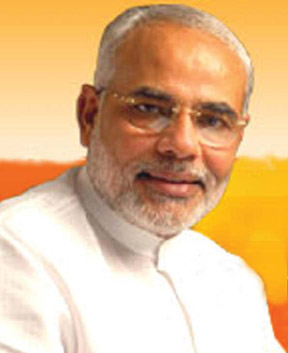 AHMEDABAD: Gujarat chief minister Narendra Modi, who knows that he is a crowd-puller, has been cashing in on his celebrity status, literally. Like Bollywood stars, getting Modi to attend functions comes at a cost. A big difference, however, is that Modi uses his "celebrity appearance fee" for a cause.
So, even as his detractors slam him for hogging the limelight, Modi's office has collected Rs 23 crore in the past five years just from his public functions. A large chunk of these funds have been diverted to Kanya Kelavani Nidhi, created for educating the girl child in Gujarat. While a major part of the sum comes from donations, considerable amounts are also raised from auctioning gift articles which Modi has received.
A part of the collections also goes to the CM's Relief Fund, which saw inflow to the tune of Rs 104 crore ever since Modi took over the reins.
A Gujarat-based corporate house, which recently invited Modi to inaugurate its facility, donated Rs 11 lakh to CM's fund. The amount depends on the paying capacity of the organizers. Modi inaugurated about 20 such events in January 2010 alone and presided over hundreds of such events in the past five years. "He started the practice in 2006.
The donation is voluntary," said a CM aide. Officials do, however, size up the paying capacity of the organizers and drop hints about what should be the amount of donation. A lot of scholarships to bright girl students and bonds worth Rs 1,000 each to help support the education of lakhs of girls have come out of this fund.
 Let me begin with a set of disclosures:
 I have perhaps written more articles against Modi and his handling of the post-Godhra scenario than most people have; I have called him a modern-day Hitler and have always said that Godhra shall remain an enduring blemish not just on him but on India’s political class. I still believe that what happened in Gujarat during the Godhra riots is something we as a nation will pay a heavy price for.
But the fact is that time has moved on. As has Narendra Modi. He is not the only politician in India who has been accused of communalism. It is strange that the whole country venerates the Congress Party as the secular messiah but it was that party that presided over the riots in 1984 in which over 3,500 Sikhs died: thrice the number killed in Gujarat.
The fact of the matter is that there is no better performer than Narendra Modi in India’s political structure.
Three weeks ago, I had gone to Ahmedabad to address the YPO and I thought it would be a good opportunity to catch up with Modi. I called him the evening before and I was given an appointment for the very day I was getting into Ahmedabad. And it was not some official meeting but instead one at his house. As frugal as the man Modi is.
And this is something that the Gandhis and Mayawatis need to learn from Modi. There were no fawning staff members; no secretaries running around; no hangers on…just the two of us with one servant who was there serving tea.
And what was most impressive was the passion which Modi exuded. The passion for development; the passion for an invigorated Gujarat; the passion for the uplifting the living standards of the people in his state and the joy with which he recounted simple yet memorable data-points.
For instance, almost all of the milk consumed in Singapore is supplied by Gujarat; or for that matter all the tomatoes that are eaten in Afghanistan are produced in Gujarat or the potatoes that Canadians gorge on are all farmed in Gujarat.
But it was industry that was equally close to
his heart.
It was almost like a child, that he rushed and got a coffee table book on GIFT: the proposed Gujarat Industrial City that will come up on the banks of the Sabarmarti: something that will put the Dubais and the Hong Kongs of this world to shame.
And while on the Sabarmati, it is Modi who has created the inter-linking of rivers so that now the Sabarmati is no longer dry.
He then spoke about how he was very keen that Ratan Tata sets up the Nano plant in Gujarat: he told me how he had related the story of the Parsi Navsari priests to Ratan and how touched Ratan was:
the story is, when the Navsari priests, (the first Parsis) landed in Gujarat, the ruler of Gujarat sent them a glass of milk, full to the brim and said, there was no place for them: the priests added some sugar to the milk and sent it back saying that they would integrate beautifully with the locals and would only add value to the state.
Narendra Modi is clearly a man in a hurry and he has every reason to be. There is no question in any one’s mind that he is the trump card for the BJP after Advani and Modi realises that. People like Rajnath Singh are simply weak irritants I would imagine.
He also believes that the country has no apolitical strategy to counter terrorism and in fact he told me how he had alerted the Prime Minister, the Home Minister and the NSA about the impending bomb blasts in Delhi and they did not take him seriously. And then the September 13 blasts happened!
It was this resolve of Modi’s that I found very admirable. There is a clear intolerance of terrorism and terrorists which is evident in the way the man functions; now there are many cynics who call it minority-bashing but the truth of the matter is that Modi genuinely means business as far as law and order is concerned.
I left Modi’s house deeply impressed with the man as Chief Minister: he was clearly passionate and what’s more deeply committed. When I sat in the car, I asked my driver what he thought of Modi and his simple reply was Modi is God. Before him, there was nothing. No roads, no power, no infrastructure. Today, Gujarat is a power surplus state.
Today, Gujarat attracts more industry than all the states put together. Today, Gujarat is the preferred investment destination for almost every multi-national and what’s more, there is an integrity that is missing in other states.
After I finished talking to the YPO (Young President’s Organisation) members, I asked some of them very casually, what they thought of Modi. Strangely, this was one area there was no class differential on. They too said he was God.
But what they also added very quickly was if India has just five Narendra Modis, we would be a great country. I don’t know if this was typical Gujarati exaggeration or a reflection of the kind of leadership India now needs!
There is however, no question in my mind, that his flaws apart, Narendra Modi today, is truly a transformational leader! And we need many more like him!
Suhel Seth
The writer is Managing Partner, Counselage
Link
 The Times of India
Aug:19:2009
Tarun Vijay
"I am not prepared to discuss ethics. We have a pistol and are in a position to use it." So said Mohammad Ali Jinnah while delivering his presidential speech at the Muslim League convention on July 19, 1946.
What followed was an unimaginable massacre of Hindus in Kolkata on August 16, 1946. Six thousand killed, twenty thousand raped and maimed.
Dr Syama Prasad Mookerjee, the then leader of Hindu Mahasabha had said, "Jinnah is out to destroy the very soul of India."If one single instance should be cited to understand what Jinnah really was, it would not be his speech in the Constituent Assembly, Karachi, often quoted by Indian Hindus, but his call for "Direct Action".
That was August 16, 1946, known as the day of "great Calcutta killings". After the "Direct Action" resolution was passed by the Muslim League on July 19, 1946, its president, Mohammad Ali Jinnah, said in his valedictory speech: "What we have done today is the most historic act in our history. Never have we in the whole history of the League done anything except by the constitutional methods and by constitutionalism. But now we are obliged and forced into this position. This day we bid goodbye to constitutional methods…. Now the time has come for the Muslim Nation to resort to direct action. I am not prepared to discuss ethics. We have a pistol and are in a position to use it."
Syama Prasad Mookerjee, the then leader of the Hindu Mahasabha, who had said, "Jinnah is out to destroy the very soul of India", organized Hindus fearlessly and foiled Jinnah’s plan to oust Hindus from Kolkata. He formed a volunteer group of the Hindus named the Hindusthan National Guards, resisted horrendous goondaism of the League and moved in the riot-affected areas giving courage to the victims of a planned slaughter and orgy of violence by the League’s marauders.Syama Prasad Mookerjee was traveling all over India awakening the masses to rise against the partition plot. On October 8, 1944, at a United Provinces Hindu Conference, he said, "The sooner Mr Jinnah understands that Pakistan in any form or shape will be resisted by Hindus and many others with the last drop of blood, the better for him, for he will then quietly descend on realities and himself plead for a just and equitable settlement.
None but an agent of imperialism will so block the path of Indian unity and freedom as Mr Jinnah is doing."Dr Mookerjee, who is respected as the ideological icon and source of inspiration by the Bharatiya Janata Party, was a devotee of Sri Aurobindo and The Mother.
In fact, he had been in close contact with Sri Aurobindo, who had said, "The idea of two nationalities in India is only a new-fangled notion invented by Jinnah for his purposes and contrary to the facts.
More than 90% of the Indian Mussalmans are descendants of converted Hindus and belong as much to the Indian nation as the Hindus themselves. This process of conversion has continued all along; Jinnah is himself a descendant of a Hindu,converted in fairly recent times,named Jinabhai and many of the most famous Mahommedan leaders have a similar origin."(SABCL, vol.26, page 46).
It was Dr Mookerjee who stood firm and tried to organize a people's movement against partition. He said: “Hindus regard this country as their sacred and holy land. Irrespective of provincial barriers or the diversity in faiths and languages there exists a remarkable economic and cultural unity and inter-dependence which cannot be destroyed at the will of persons and parties who think it beneath their dignity to regard India as their motherland. We must live and die for India and her liberty.” (24th December 1944).
He disagreed with Gandhi placating the Muslim demands and said,"As soon as the other communities realize that the Hindus of India are united and have pledged themselves to stand together for the attainment of their ideal and have adopted a policy of understanding and tolerance to all classes of people residing in India, other communities whose support we are seeking in vain today will then join us voluntarily and on terms honourable to all.”(“Awake Hindusthan”, Page 12).
He further said: “Our experiences in recent years have proved that much as we would be willing to surrender the rights and interests of the Hindus for the purpose of placating other communities, much as we would like to pursue the policy of delivering “blank cheques” the response from the other side is slow and halting, if not sometimes hostile in character.("Awake Hindusthan", Page 13)
In this context, I would like to add that however different Jinnah might have been , we just can't belittle Nehru before Jinnah. Nehru belonged to us; he fought for India’s freedom, spent years in jail and had an Indian dream. We may have a thousand differences with him on policies and programmes, but so what? That would be our "domestic matter".
Jinnah led our motherland’s vivisection and he never fought for the freedom struggle.MJ Akbar has written these lines describing his persona,"Muhammad Ali Jinnah, aristocrat by temperament, catholic in taste, sectarian in politics, and the father of Pakistan, was the unlikeliest parent that an Islamic republic could possibly have.
He was the most British of the generation of Indians that won freedom in August 1947. As a child in the elite Christian Mission High School in Karachi, he changed his birthday from 20 October to Christmas Day. As a student at Lincoln's Inn, he anglicised his name from Jinnahbhai to Jinnah. For three years, between 1930 and 1933, he went into voluntary exile in Hampstead, acquired a British passport, set up residence with his sister Fatimah and daughter Dina, hired a British chauffeur (Bradley) for his Bentley, kept two dogs (a black Dobermann and a white West Highland terrier), indulged himself at the theatre (he had once wanted to be a professional actor so that he could play Hamlet) and appeared before the Privy Council to maintain himself in the style to which he was accustomed.
He wore Savile Row suits, heavily starched shirts and two-tone leather or suede shoes……Despite being the Quaid-e-Azam, or the Great Leader of Muslims, he drank a moderate amount of alcohol and was embarrassingly unfamiliar with Islamic methods of prayer.
He was uncomfortable in any language but English, and made his demand for Pakistan — in 1940 at Lahore — in English, despite catcalls from an audience that wanted to hear Urdu.”
That was a bit of Syama Prasad and the related reflections that may prove worthwhile in the present political debate enveloping the nationalist school of politics.
At the end of it, what the Gita has said and the RSS teaches us must make the final lines to this blogpost:
It’s better to die unwavering even in tatters than to change track midway and die stinking rich.That’s Dharma.Krishna said: "Swadharme nidhano shreyo (to live and die in ones’ own path alone is the life worthwhile and adopting the ‘other’ dharma is horrible)".
For small desires we lose a lifetime’s achievements and glory.History was never made essentially by those who became state heads, but often by those who didn’t.Or by those who gave up everything for others’ good, honestly.
Syama Prasad and Deen Dayal Upadhyaya are two major icons of faith for the Hindu nationalist parivar. Both created history and died in their early fifties. Both were mysteriously ‘murdered’. Their lives must light the path of those who care to follow swadharma.That’s BJP’s legacy too.
As it is of other ideologically committed organisations of the saffron hue.Lincoln didn’t shy away from the civil war and stood like a rock on the question of American spirit and unity. So was Syama Prasad. He died but didn’t bend.
 Most of the times Bihar is in the news for the wrong reasons. Its an irony that a state with such a glorious past is now one of the poorest state of India!
Bad governance has played its part very much leading to scams, poverty, corruption, illiteracy, crime and what not.
But something has changed in past 3-4 years. What is it? In past year Bihar was the 2nd best state in terms of development with 11% growth rate ! Gujarat leads the race but just by a margin.
Highlights-
- Despite three years of floods followed by a year of drought, backward and benighted Bihar reports a miraculous figure: 11% GDP growth.
- More than 6,800 km of roads have been relaid and 1,600 bridges and culverts constructed in the last four years.
- Automobile sales in the state grew 45% in 2009, at a time when sales had dipped 20-25 % in several other states during the economic slowdown.
- The kidnapping industry has clearly fallen on hard times. One indication of this is that doctors no longer refuse to go to patients homes on emergency calls. Today you can see boards at clinics saying we go on calls, says Dr Amulya Kumar Singh.
- Most of Bihars infamous dons are behind bars. That includes Mohd Shahabuddin, the former RJD MP who had once gone live on TV, daring the state police chief to arrest him.
- Speedy trials have ensured a total of 38,824 convictions between 2006 and September 2009.The convicts included dons and their henchmen. Gun-toting strongmen are no longer a common sight on the streets of Bihar. Policemen patrol them now.
- Malls, shops and private educational institutions are coming up. So are mobile service providers and banking firms. Its boom time for real estate with apartment buildings coming up all around.
- The flip side is that much of this growth does not get reflected in social indicators which remain abysmal. But, as Gupta says, it would be unrealistic for anyone to expect the moon at this stage.
- Right now the fundamentals are getting corrected and therefore you can find mostly infrastructural indicators of growth; one will have to wait for social indicators to become visible, he says. While contractors and realtors stand to gain, more than half the states 8.2 crore people 1.25 crore families still live below the poverty line. For these families to prosper, Bihar desperately needs huge investments and more growth.
Full page article HERE
Less than 5 year of rule and the change is enormous emphasizing the fact that good governance can do wonders even in less time.